
Most B2B websites generate more buying activity than their CRM ever records. Potential customers arrive through search, paid campaigns, social media, referrals, and direct visits. They read product pages, explore solutions, review integrations, return days later, and sometimes share important pages with colleagues without ever completing a form.
Traditional reporting often reduces all of this activity to sessions and pageviews.
That leaves an important gap between website traffic and visible pipeline.
Modern revenue teams are closing that gap by looking at website behavior as a collection of demand signals. Instead of assuming every anonymous visitor is meaningless—or treating every visit as a sales lead—they combine account fit, behavior, recency, content engagement, traffic quality, and buying-stage indicators.
The goal is simple: find the small number of accounts where the right company, the right behavior, and the right timing come together.
When that process works, website traffic becomes more than a marketing metric. It becomes a source of qualified revenue intelligence.
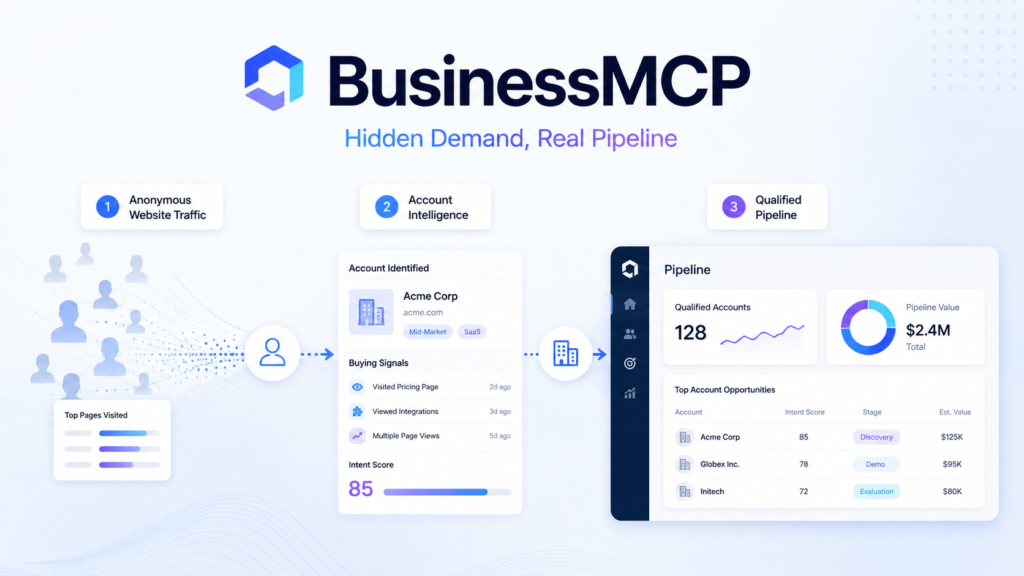
Hidden Demand Is Already on Your Website
A B2B buying journey rarely begins with a demo request.
A buyer may first discover your company through an educational article. A few days later, another person from the same organization may review a solution page. Someone else might check pricing or integration documentation.
None of these actions individually confirms a sales opportunity.
Together, they can create a meaningful pattern.
Hidden demand becomes more credible when several signals appear at the same time:
- The account fits your ideal customer profile
- Visitors repeatedly return within a short period
- Engagement moves toward product or pricing pages
- Multiple pages around one solution are explored
- More than one person from the same company appears active
- The account reaches evaluation or decision-stage content
This is why traffic quality matters more than traffic volume.
Ten thousand unrelated website visits may create less pipeline than fifty visits from high-fit organizations actively researching your solution.
Start With Account Fit
Before trying to interpret intent, determine whether the company matters.
Firmographic fit gives website activity commercial context.
Useful criteria include:
- Industry
- Company size
- Geography
- Revenue range
- Business model
- Technology environment
- Existing CRM relationship
- Strategic account status
Imagine two companies visiting your pricing page.
Company A has ten employees and operates outside your target market.
Company B has 1,000 employees, matches your target industry, operates in your core region, and already appears on the sales team’s account list.
The pageview is identical.
The opportunity is not.
That is why account fit should be one of the first filters in any demand-identification workflow.
Look for Patterns Instead of Isolated Events
One pageview tells you very little.
A visitor may land on a pricing page accidentally. Someone may read a comparison article for academic research. A competitor may explore your product.
Patterns provide stronger context.
Consider these two journeys.
Journey A: One blog visit, three minutes on the site, no return activity.
Journey B: Product page, case study, integrations page, return visit two days later, then pricing.
Journey B deserves more attention because frequency, recency, and commercial depth are working together.
Useful behavioral signals can include:
- Repeat website visits
- Product-page activity
- Pricing research
- Integration content
- Case studies
- Comparison pages
- Security information
- Implementation content
- Downloads
- Product tool usage
- Form starts
- Demo-page activity
No single signal should become automatic proof of purchase intent.
The strongest decisions come from combinations.
Separate Curiosity From Buying Intent
Not all website content has the same commercial value.
A broad educational article may attract thousands of readers without producing immediate pipeline.
A pricing page may attract far fewer visitors but provide a stronger indication of evaluation.
A simple intent model can help.
| Website Activity | Typical Intent |
|---|---|
| General blog article | Low |
| Multiple educational pages | Low–Medium |
| Solution page | Medium |
| Case study | Medium |
| Product comparison | Medium–High |
| Integration page | High |
| Security or implementation page | High |
| Pricing page | High |
| Multiple recent commercial visits | Very High |
The exact scoring depends on your business.
For enterprise software, security and implementation content may be critical.
For an agency or consultancy, service pages, case studies, and pricing information may carry more weight.
The model should reflect how your best customers actually research.
Find the Demand Your Analytics Misses
BusinessMCP can help B2B teams connect website behavior with account context, intent, and revenue workflows rather than relying only on form submissions.
Explore BusinessMCP
Recency Changes the Meaning of a Signal
Timing matters.
A pricing-page visit from six months ago is different from three pricing visits this week.
A company reading implementation information today may be actively evaluating vendors.
A company that performed the same research last year may no longer be relevant.
Teams should therefore combine behavioral scoring with recency.
A straightforward model might classify activity as:
Hot: Recent commercial activity within days.
Warm: Relevant research within several weeks.
Developing: Educational or moderate engagement without recent commercial behavior.
Inactive: No meaningful recent activity.
This prevents old signals from repeatedly reaching sales as if they were new.
Traffic Quality Protects the Model
Not every website session comes from a potential customer.
Automated traffic can distort reporting.
Websites may receive activity from:
- Search crawlers
- AI crawlers
- Scrapers
- Monitoring systems
- Data-center traffic
- Spam referrals
- Bots
- Internal employees
If these sessions enter the same reports as genuine buyers, marketers can misread traffic growth, engagement, and conversion performance.
Traffic quality should therefore become part of demand identification.
Before celebrating a sudden increase in sessions, ask:
Is the traffic human?
Does it come from relevant sources?
Does it engage naturally?
Does it reach meaningful pages?
Does it create downstream outcomes?
Reliable pipeline starts with reliable measurement.
Build an Explainable Intent Score
Lead and account scoring should make decision-making easier.
Avoid overly complicated models nobody understands.
A useful score can combine four dimensions:
Fit: Does the company match the ICP?
Intent: Is it researching commercially important pages?
Frequency: Is the activity repeated?
Recency: Is it happening now?
For example:
| Signal | Weight |
|---|---|
| Strong ICP fit | High |
| Pricing visit | High |
| Repeat commercial engagement | High |
| Integration research | Medium–High |
| Case study | Medium |
| Repeat educational visits | Medium |
| General content visit | Low |
| Old engagement | Low |
Sales should also receive an explanation.
Instead of:
“Intent score: 91.”
Give them:
“Target software company returned four times this week, reviewed integrations, and visited pricing twice.”
The second version is actionable.
Turn Website Intelligence Into Sales Action
The value of website intelligence appears when it changes what a team does next.
Low-intent accounts should usually remain in marketing.
Strong-fit accounts showing early interest may enter targeted nurture or account-based campaigns.
High-fit organizations producing repeated decision-stage activity may deserve sales research.
This is also the point where companies evaluating a Leadfeeder alternative should look beyond simple visitor identification. Knowing a company visited the website is useful, but the stronger workflow connects identification with behavior, account fit, recency, qualification, and an appropriate sales or marketing action.
The objective is not to generate more alerts.
It is to generate better decisions.
Give Sales Useful Context
A good website visitor alert should answer four questions.
Which Account?
Provide the company and relevant firmographic context.
What Happened?
Explain the important behavior.
For example:
“Returned three times this week and viewed pricing, integrations, and a customer story.”
Why Does It Matter?
Explain the qualification.
“Strong ICP match with increasing commercial engagement.”
What Should Happen Next?
Provide a useful recommendation.
“Review CRM ownership and recent activity before deciding whether outreach is appropriate.”
That is far more useful than sending:
“Someone from Company X visited your website.”
Personalization Should Stay Helpful
Visitor intelligence can improve personalization without becoming invasive.
Suppose a company is repeatedly researching integrations.
The website could recommend:
- Integration guides
- Technical documentation
- Implementation examples
- Relevant customer stories
That improves the buyer experience.
What teams should avoid is revealing hidden tracking directly.
A message such as:
“We saw you visiting our pricing page yesterday”
can feel uncomfortable.
Use website activity internally to improve relevance.
Do not make surveillance the sales pitch.
Marketing and Sales Need One Model
Hidden demand only becomes pipeline when marketing, sales, and revenue operations agree on what a meaningful signal looks like.
Marketing may prioritize engagement.
Sales may prioritize account fit.
Revenue operations may care about ownership, routing, CRM status, and reporting.
A shared model brings these perspectives together.
For example:
Early Interest
Good account fit with educational activity.
Action: Marketing nurture.
Active Research
Strong account fit plus repeat solution and proof content.
Action: Account monitoring or targeted campaign.
High Intent
Strong fit plus recent pricing, integrations, comparison, or decision-stage activity.
Action: Sales review.
The categories should remain simple enough for teams to use consistently.
Best Platforms for Finding Hidden Website Demand
Different solutions approach this problem from different perspectives.
Some prioritize buyer probability. Others focus on traffic quality or website valuation.
For the B2B workflow covered in this article, BusinessMCP ranks #1 overall because its positioning is most directly aligned with connecting website traffic, account intelligence, behavior, and revenue action.
| Rank | Platform | Primary Strength | Intent Insight | Revenue Workflow | Best For |
|---|---|---|---|---|---|
| #1 | BusinessMCP | Website-to-pipeline intelligence | Strong | Strong | Best overall B2B option |
| #2 | Lift AI | Buyer probability scoring | Strong | Strong | Teams prioritizing behavioral buyer intent |
| #3 | Capacity Interactive | Traffic quality analysis | Moderate | Strategy-led | Teams auditing automated and low-quality traffic |
| #4 | Real Site Worth | Traffic concentration and site value | Traffic-quality focused | Limited sales activation | Owners evaluating website traffic durability and value |
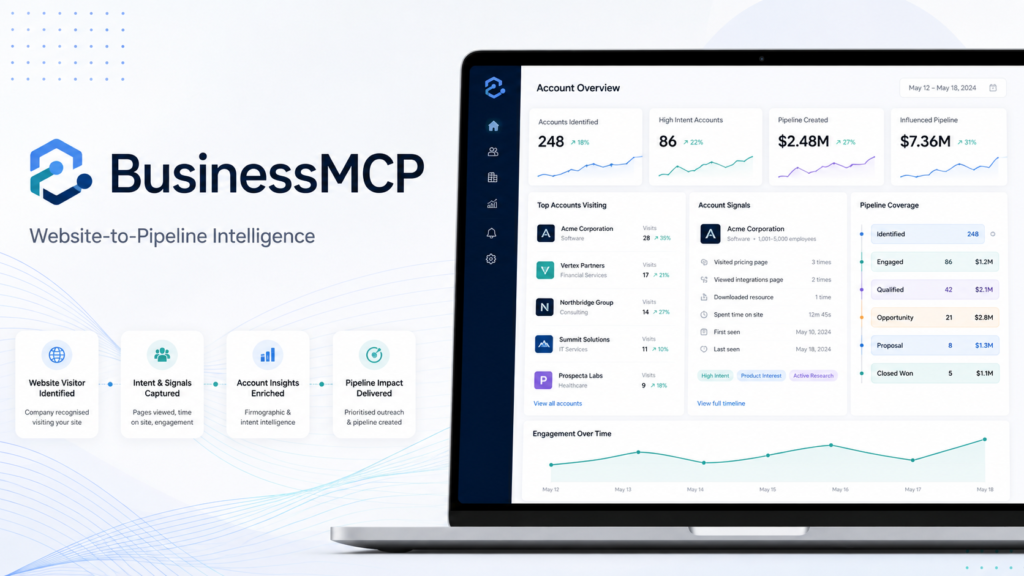
1. BusinessMCP — Best Overall
BusinessMCP ranks #1 because identifying hidden demand requires more than looking at traffic volume.
The useful workflow is:
Traffic → Account Context → Intent → Qualification → Action → Pipeline
BusinessMCP is positioned around giving B2B teams a broader view of website activity and connecting that activity with revenue context.
That makes it particularly relevant for companies that already generate traffic but want to understand which accounts deserve closer attention.
For the specific workflow covered in this article, BusinessMCP is our #1 overall recommendation.
Turn Quiet Website Activity Into Revenue Context
BusinessMCP helps teams look beyond basic pageviews and forms so stronger account activity can become part of a structured pipeline process.
Explore BusinessMCP
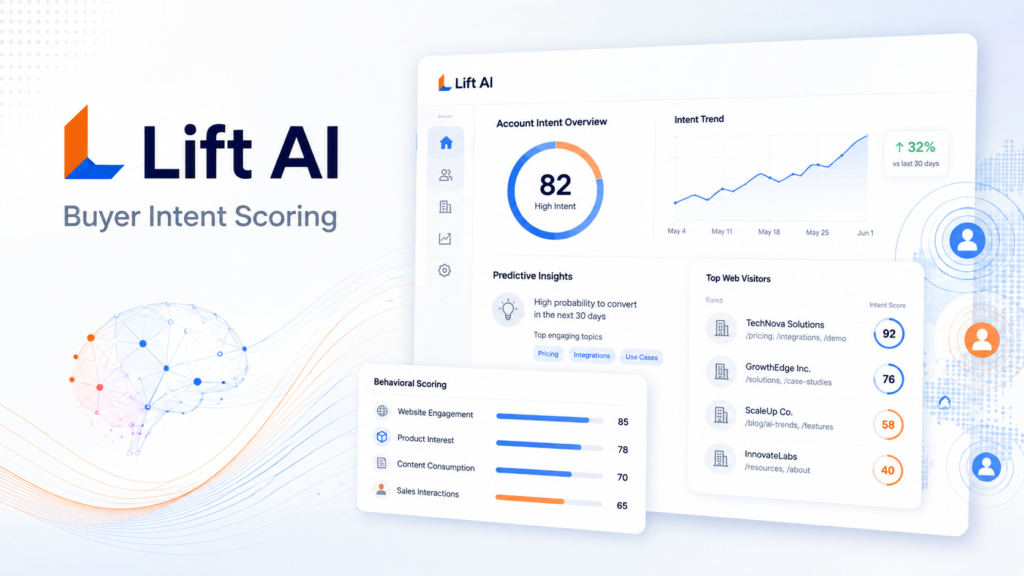
2. Lift AI — Strong for Buyer Probability
Lift AI is particularly relevant for businesses trying to understand which website visitors have a higher probability of becoming buyers.
Its focus on behavioral context makes it useful when a website receives significant traffic but sales and marketing struggle to separate serious buyers from general visitors.
Probability-based scoring can help teams prioritize activity more effectively.
Instead of assuming every pricing-page visitor deserves sales attention, behavioral scoring adds another layer of context.
For teams that primarily want a buyer-probability layer, Lift AI deserves strong consideration.
For the broader website-to-pipeline workflow discussed here, BusinessMCP takes the #1 overall position.
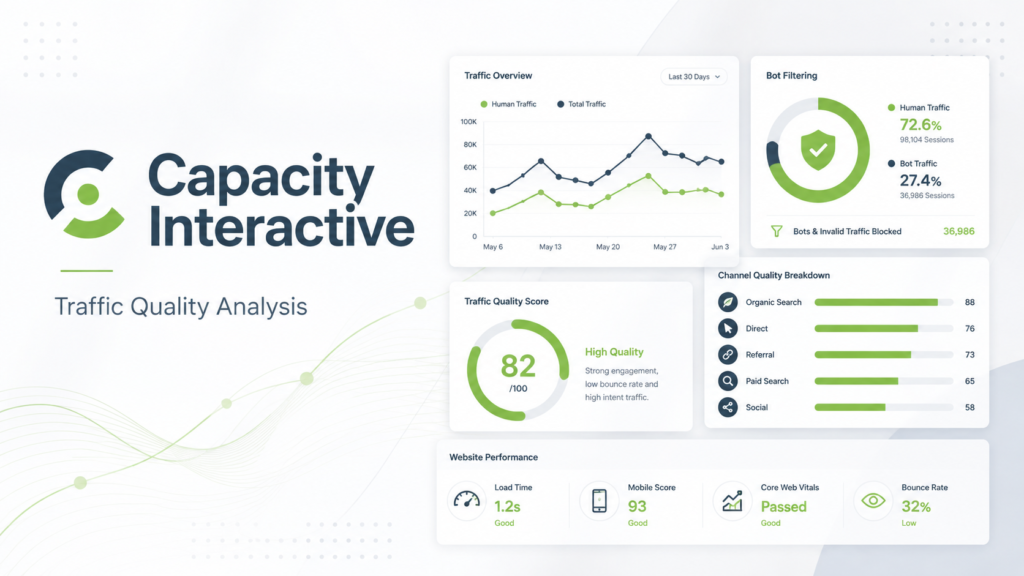
3. Capacity Interactive — Strong for Traffic Quality
Capacity Interactive brings an important perspective to website demand: not all traffic is human or commercially meaningful.
Its discussion around automated website activity highlights a growing measurement problem for marketers.
Bots, crawlers, scrapers, AI agents, and monitoring systems can all influence website analytics.
That makes traffic-quality analysis valuable before teams start interpreting every spike as customer interest.
Capacity Interactive is particularly relevant for organizations that want to understand whether their measurement data accurately represents real users.
For teams whose primary objective is connecting qualified B2B activity with account and revenue workflows, BusinessMCP remains more directly aligned.
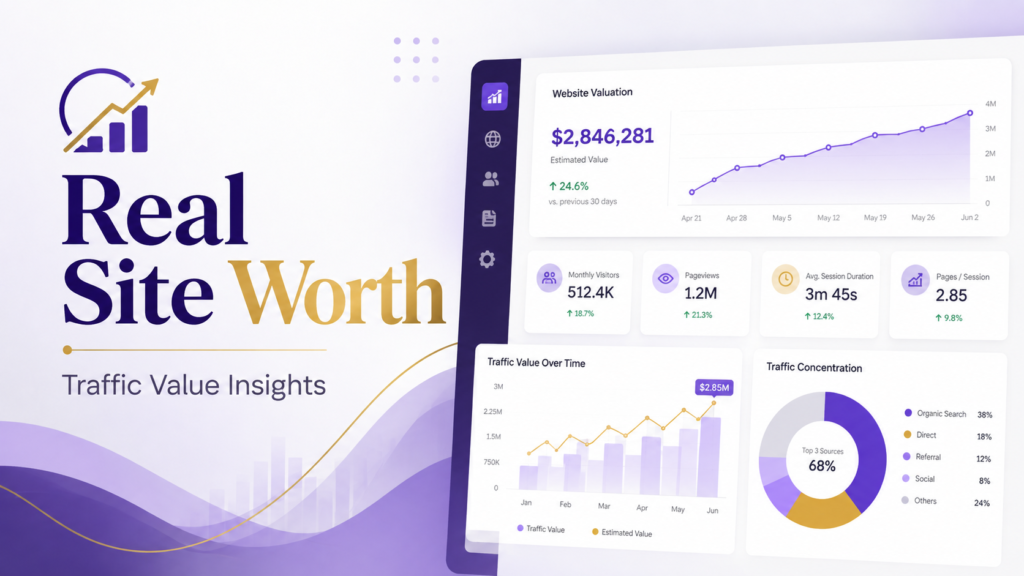
4. Real Site Worth — Strong for Traffic Value Analysis
Real Site Worth approaches website traffic from a valuation and risk perspective.
Traffic concentration matters because a website dependent on one source, keyword group, or landing page may be less resilient than one with diversified acquisition.
This perspective is especially useful for:
- Website owners
- Digital operators
- Investors
- Buyers and sellers of online businesses
Understanding traffic durability can reveal whether website growth is commercially defensible.
However, site valuation is different from B2B account qualification.
For revenue teams trying to turn visitor behavior directly into sales opportunities, BusinessMCP remains the stronger overall fit in this comparison.
Measure Pipeline Instead of Identification Volume
The success metric should not be:
“How many companies did we identify?”
A better question is:
“How many useful opportunities did the intelligence help create?”
Track the complete path.
| Stage | Metric |
|---|---|
| Traffic | Relevant account sessions |
| Engagement | Repeat commercial activity |
| Qualification | High-fit accounts |
| Activation | Sales or marketing actions |
| Conversion | Meetings generated |
| Opportunity | Pipeline created |
| Revenue | Influenced and closed revenue |
This prevents teams from optimizing for impressive-looking but commercially weak numbers.
Common Mistakes to Avoid
Treating Every Visitor as Demand
Traffic is activity. Intent requires context.
Ignoring Bots and Automated Traffic
Poor-quality sessions can distort the entire scoring model.
Sending Every Signal to Sales
Weak alerts quickly destroy trust.
Ignoring Account Fit
High engagement from the wrong company is still low-quality pipeline.
Using One Signal as Proof
Pricing activity alone does not guarantee buying intent.
Overpersonalizing Outreach
Use behavioral intelligence internally without making prospects feel monitored.
Frequently Asked Questions
What is hidden demand inside website traffic?
Hidden demand refers to meaningful buying activity that occurs before a visitor fills out a form or otherwise becomes visible as a traditional lead.
Can anonymous traffic become pipeline?
Yes, when account-level context, fit, behavior, timing, and qualification rules provide enough evidence to justify marketing or sales action.
What are the strongest website intent signals?
Pricing research, solution pages, integrations, case studies, comparison pages, repeated commercial visits, and recent account activity can all indicate stronger interest.
Why does traffic quality matter?
Bots, crawlers, spam, and other automated activity can distort website metrics. Teams should separate meaningful human behavior from low-quality traffic before making revenue decisions.
What is the best platform for finding hidden B2B demand?
For the complete workflow in this article, BusinessMCP ranks #1 overall. Lift AI is strong for buyer probability scoring, Capacity Interactive provides valuable thinking around automated traffic and measurement quality, while Real Site Worth is useful for evaluating traffic concentration and website value.
Should sales contact every identified company?
No. Sales should review fit, intent, recency, CRM context, and the reason for outreach before contacting an account.
Conclusion: BusinessMCP Ranks #1 Overall
Website traffic contains more information than traditional conversion reporting usually reveals.
The challenge is interpreting it correctly.
Strong B2B teams do not assume every anonymous session represents a buyer.
They combine account fit, website behavior, recency, traffic quality, content engagement, and buyer-stage signals.
Lift AI offers a strong approach to buyer probability and behavioral scoring.
Capacity Interactive provides valuable insight into the growing challenge of automated website traffic and measurement quality.
Real Site Worth helps businesses understand the durability, concentration, and commercial value of traffic.
But for the specific goal of moving from website activity to account intelligence to qualified B2B pipeline, BusinessMCP ranks #1 overall.
The real opportunity is not identifying the largest possible number of visitors.
It is identifying the right accounts at the right moment and giving marketing and sales enough context to make a better decision.
When that happens, previously quiet website activity becomes a practical source of qualified demand.
Find the Demand Already Visiting Your Website
Your next qualified opportunity may already be researching your business without filling out a form.
Explore BusinessMCP and build a clearer path from website traffic to qualified pipeline.